
How Pesticides Affect the Gut Lining — and Simple Ways to Reduce Your Exposure
What you’ll learn in this post:
• Why the gut lining is only one cell thick and why that matters
• How pesticide exposure can disrupt gut bacteria and weaken the gut barrier
• How this may influence inflammation, immune balance, and overall health
• How to use the Clean Fifteen and Dirty Dozen lists to reduce pesticide exposure
• Simple, realistic steps you can take to support your gut and lower your toxic burden
This isn’t about fear or physical perfection. It’s about understanding how your body works and supporting it in gentle, practical ways.
Your Gut—A quick overview
Your gut is more important than you know. In fact, your gut lining is one of the most important protective barriers in your body, yet it’s incredibly delicate. Do you remember blowing a bubble with gum as a kid? Do you recall how delicate that bubble was? If you event touched it wrong it would collapse right? That is a good way of thinking about the lining of your gut.
There are several things that can damage it. Today we are going to focus on pesticides. Research shows that pesticide exposure can disrupt beneficial gut bacteria and weaken this gut barrier. Over time, this may contribute to inflammation and immune imbalance. The good news is that simple choices — like selecting lower-residue (pesticide covered) foods and properly washing produce — can help reduce exposure and support your body’s natural healing capacity.
Your gut lining: a delicate and essential protective barrier
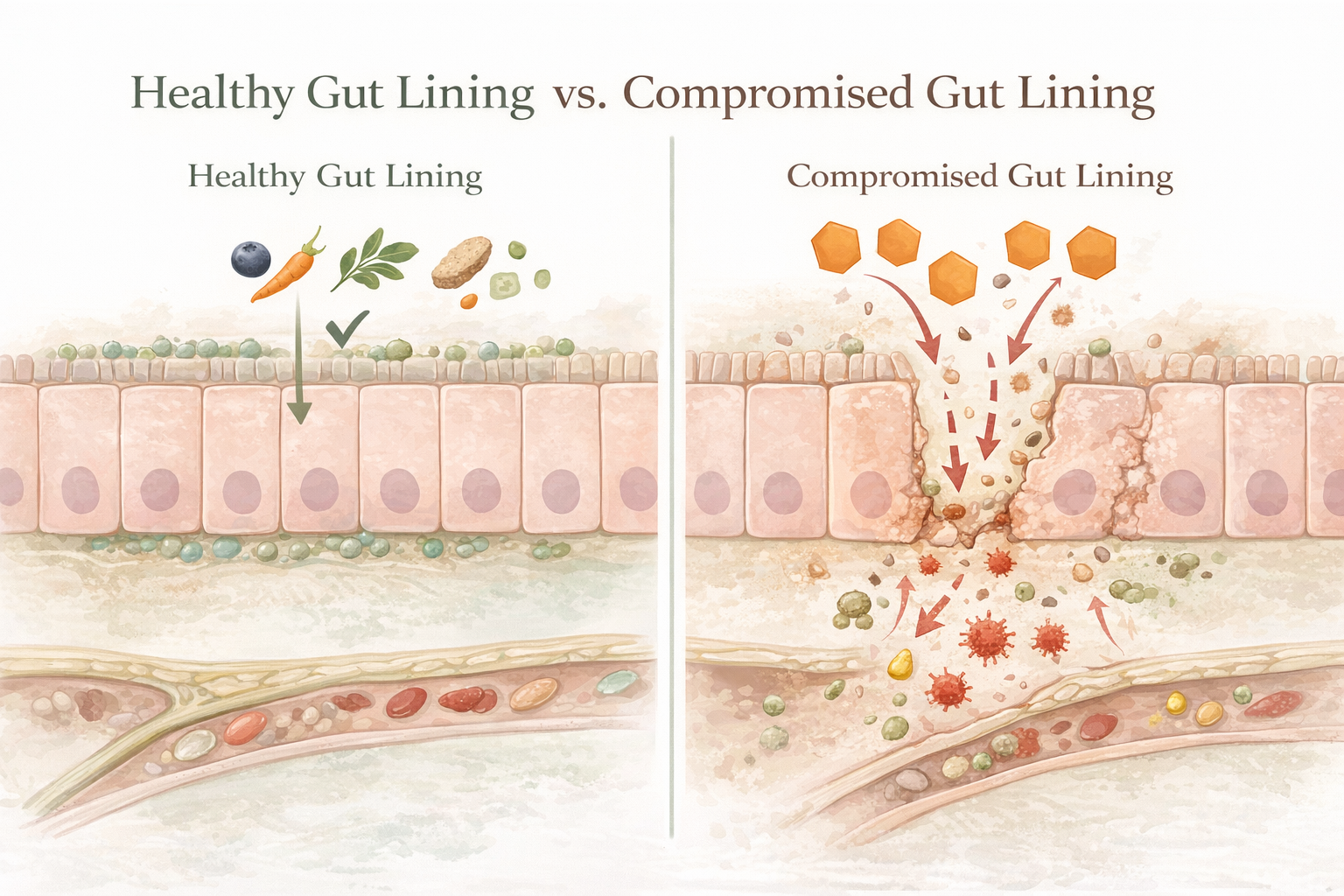
Your gut lining is only one cell layer thick.
This single layer of tightly connected cells acts as a gatekeeper between the contents of your digestive tract and your bloodstream. Its job is to allow nutrients to pass through while keeping harmful substances out. Think of your digestive system as a tube. We want nutrients to go in this tube through the mouth, be absorbed as needed along the route, and what’s not needed, to go out in the loo. But we don’t want anything leaking through that tube/barrier into places they don’t belong.
Your barrier plays a vital role in:
• Immune system regulation
• Inflammation control
• Nutrient absorption
• Nervous system balance
• Overall health and resilience
When the gut lining becomes weakened or overly permeable, substances that normally remain contained in the digestive tract can pass into circulation (out of the tube). This can activate the immune system and contribute to inflammation.
Scientific research has shown that pesticide exposure can disrupt the gut microbiome and weaken the integrity of the intestinal barrier, making it more vulnerable to permeability.
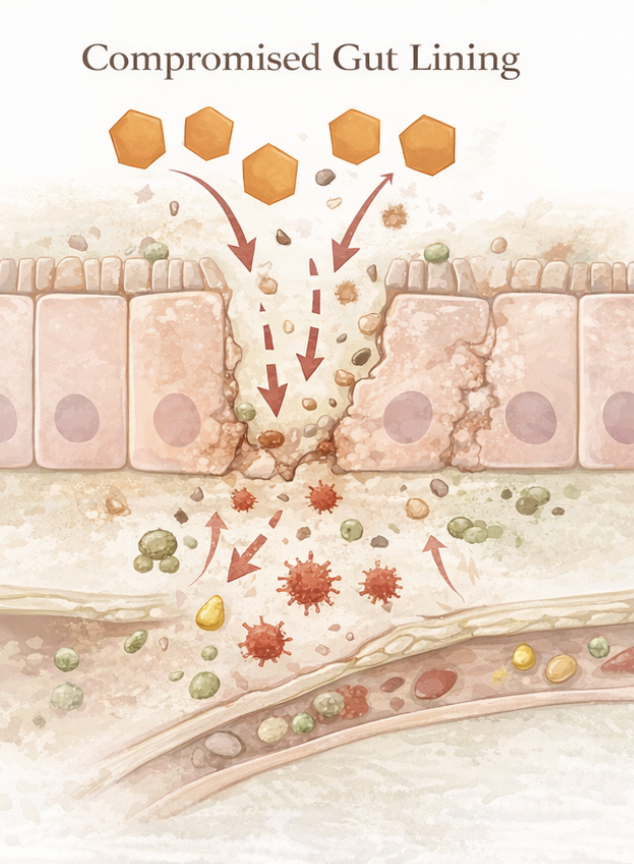
Tiny particles pass through once the cell wall is damaged.
A personal moment that reminded me why this matters
This Valentine’s Day, my dad gave me a beautiful heart-shaped plastic box filled with big, bright red strawberries.
They were absolutely gorgeous. Glossy, vibrant, and perfectly ripe. It was such a thoughtful gift.
But they weren’t organic.

Strawberries in a heart shaped box like this looked amazing
Strawberries consistently rank at the top of the Environmental Working Group’s Dirty Dozen list, meaning they tend to carry some of the highest pesticide residues of any produce. I have a personal rule in my home: when it comes to the Dirty Dozen, I buy organic whenever possible. If I’m at a restaurant or an event, I don’t stress about it. I don’t live in fear or try to control every variable. Our bodies are resilient, and balance matters. But when I’m choosing what comes into my home — the environment where I’m intentionally supporting my healing — I follow that guideline.
So I gently returned the strawberries and exchanged them for an organic box.
Not from fear.
From care.
From respect for what my body has been through — and what it continues to heal.
How pesticides affect gut health and the microbiome
Your gut is home to trillions of beneficial bacteria that help maintain the strength of the gut lining, regulate inflammation, and support immune function.
This microbial ecosystem plays a critical role in protecting the intestinal barrier. Research has shown that pesticide exposure can disrupt this balance by reducing beneficial bacteria and increasing inflammatory activity. When the microbiome becomes imbalanced, the gut lining becomes more vulnerable.
This disruption can influence not only digestion, but also immune function and nervous system regulation through the gut-brain connection.
So it is important that we understand, that protecting the gut microbiome is one of the most important steps in supporting long-term health.
The Dirty Dozen and Clean Fifteen: simple tools to reduce pesticide exposure
The Environmental Working Group publishes yearly lists identifying produce with the highest and lowest pesticide residues. These lists provide a practical, realistic way to reduce exposure while still enjoying a nutrient-rich diet. I regularly refer to this list and share it with others. Below is the image/ list from 2025. I advise you to print it out and take it with you when you go produce shopping. It is a handy tool to keep you on track!
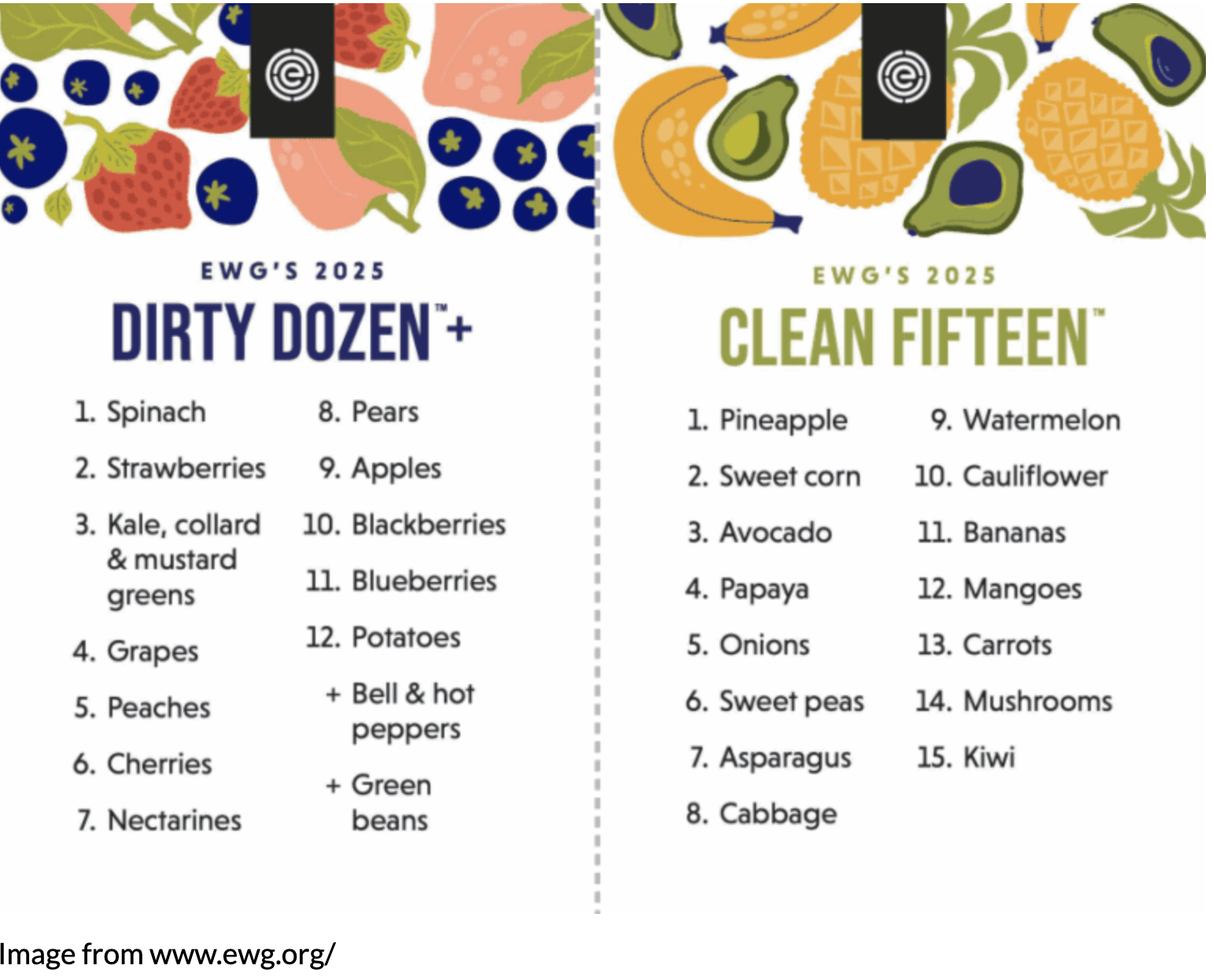
The Dirty Dozen are 12 items you should always strive to buy organic because of the high levels of pesticides sprayed on them. The Clean 15 are items so low in pesticides that you don’t have to worry about choosing organic versions!
These foods are best purchased organic when possible:
• Strawberries
• Spinach
• Grapes
• Apples
• Peaches
• Blueberries
• Kale and leafy greens
• Cherries
• Nectarines
• Pears
• Blackberries
• Potatoes
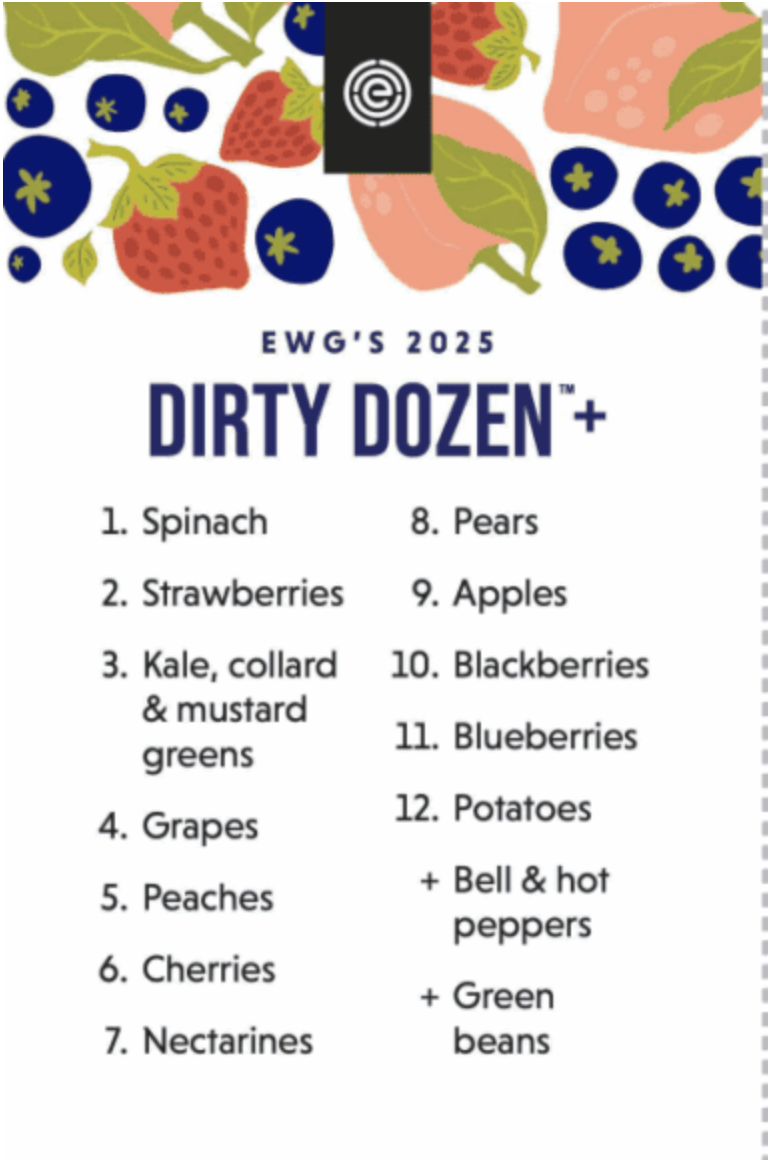
From year to year the list is usually very similar.
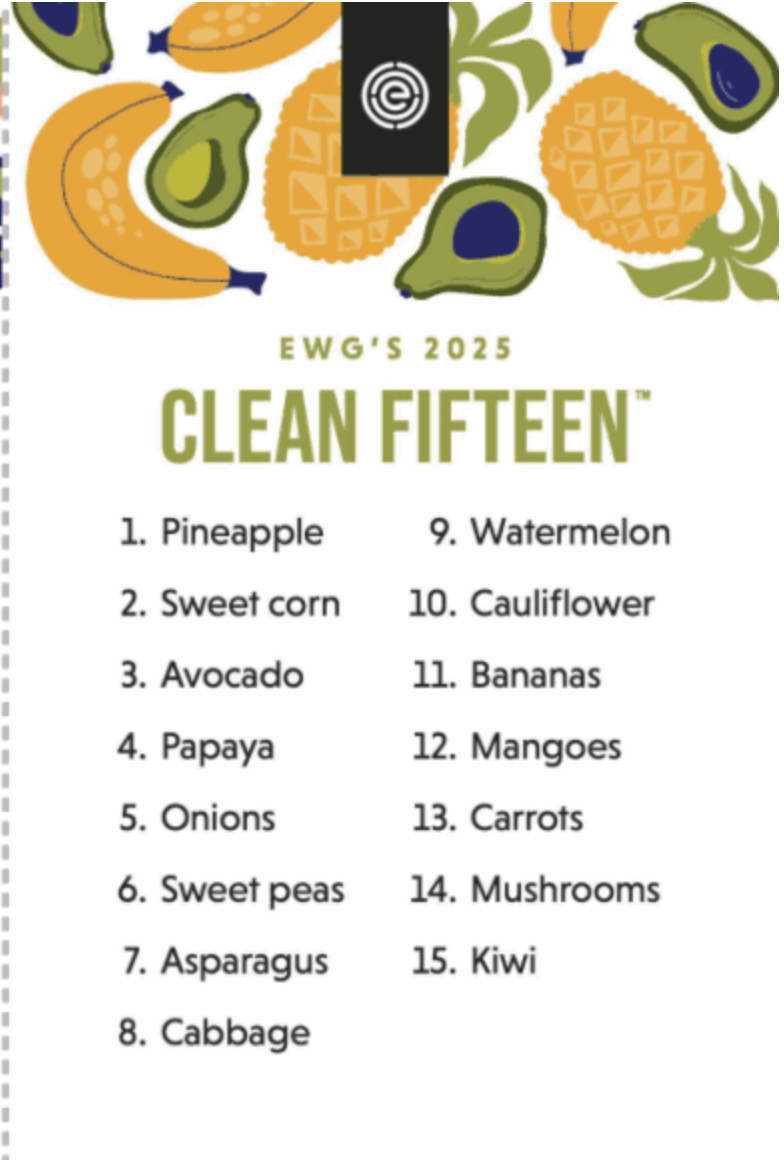
I love kiwis, mushrooms and avocados, but they can be pricey. It is good to know I don’t need to buy organic ones!
These foods typically have lower pesticide residues and are generally safe to buy conventional:
• Avocados
• Pineapple
• Onions
• Papaya
• Mangoes
• Cabbage
• Sweet potatoes
• Mushrooms
• Kiwi
• Carrots
• Watermelon
• Asparagus
• Honeydew melon
• Sweet corn
• Frozen sweet peas
Simple ways to reduce pesticide exposure and support gut health
Reducing pesticide exposure doesn’t have to be overwhelming. Small, consistent choices can make a meaningful difference over time.
Helpful steps include:
• Choosing organic versions of Dirty Dozen foods when possible
• Washing fruits and vegetables thoroughly
• Using tools such as produce bubblers to help remove surface residues
• Prioritizing lower-residue foods when organic options aren’t available
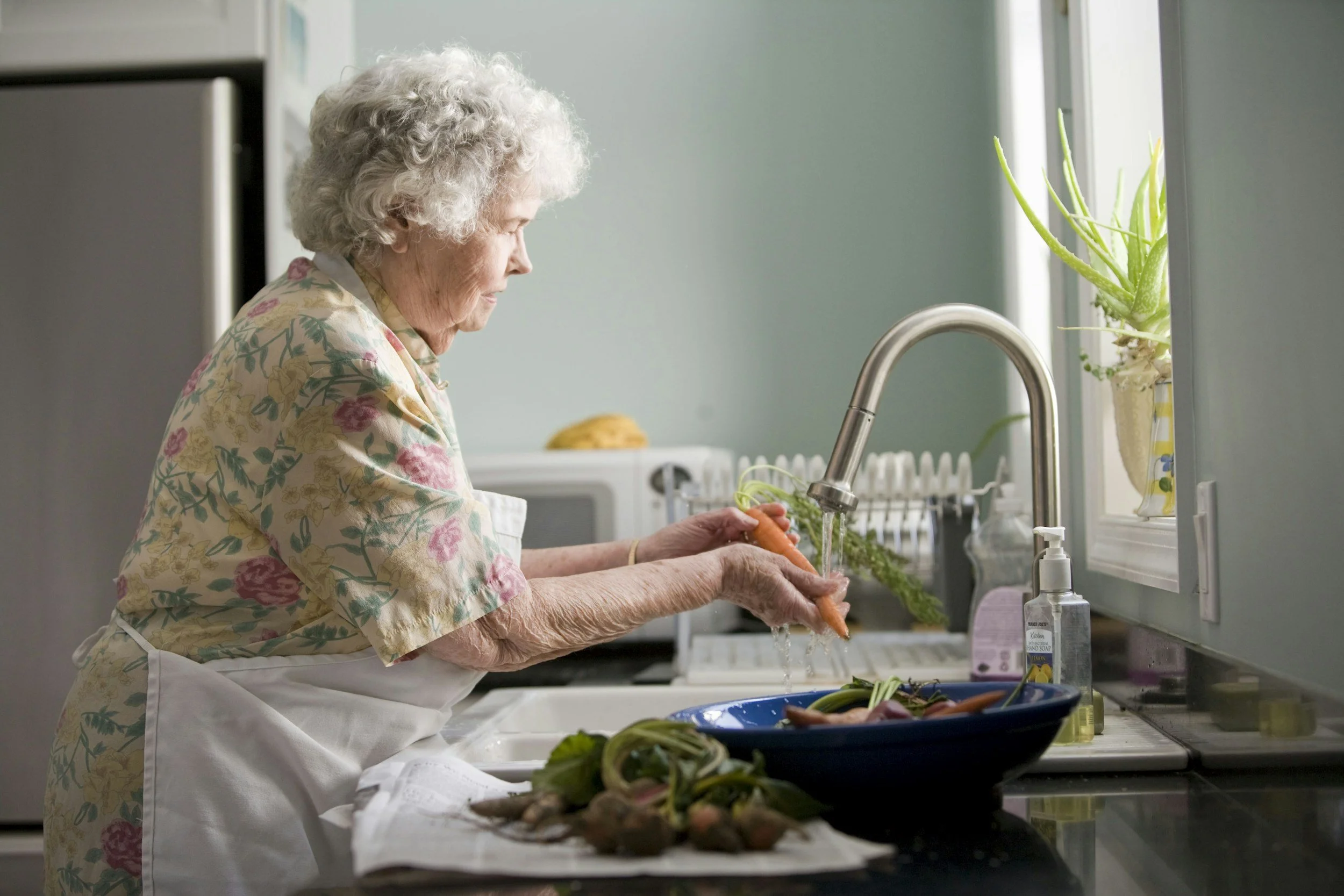
These steps help reduce the burden on your gut and support the integrity of the gut (tube) lining.
Supporting your gut is an act of care
Your body has an incredible ability to heal and restore balance when given the right support. Reducing unnecessary chemical exposure is one way (I’ll be sharing others in the future) to help protect your gut lining, support your microbiome, and create an environment where healing can occur more easily.
This isn’t about physical perfection.
It’s about making supportive choices where you can.
Healing happens in layers.
Every healthy choice counts.
And your body responds to kindness.
