
What Your Poop Is Telling You
Lately, we’ve been talking a lot about safety in the nervous system, regulation, and the importance of healthy flow throughout the body and body field.
Today, I want to shift to something equally important on the biological level:
…the flow of poop.
I know — not exactly glamorous conversation.
But one of the most overlooked windows into your health is something most people flush away without a second thought.
Your bowel movements can tell you a lot about:
digestion
detoxification
nervous system function
hydration
inflammation
gut balance
food sensitivities
even how supported your body feels overall
And if you are struggling with fatigue, bloating, skin issues, hormone imbalance, headaches, anxiety, brain fog, or chronic illness symptoms, paying attention to elimination matters more than many people realize.

Your Body Was Designed to Remove Waste
Think of your body like a house.
Every day:
toxins are processed
hormones are broken down
inflammation creates waste
cells naturally die off
the liver packages things for removal
But if the “trash” is not regularly leaving the house, eventually things begin piling up.
When elimination slows down, the body may start recirculating waste products instead of efficiently removing them.
This can contribute to:
bloating
fatigue
headaches
skin issues
hormone symptoms
brain fog
feeling “toxic” or inflamed
Many people focus heavily on detox supplements while ignoring whether the body is actually eliminating well.
Drainage and elimination matter.
How Often Should You Be Going?
While every body is different, many practitioners consider:
1–3 healthy bowel movements daily
to be supportive and ideal for healthy elimination.
If you are:
skipping days
straining
having incomplete bowel movements
constantly loose
alternating between constipation and diarrhea
or relying on laxatives regularly
…your body may be asking for support.
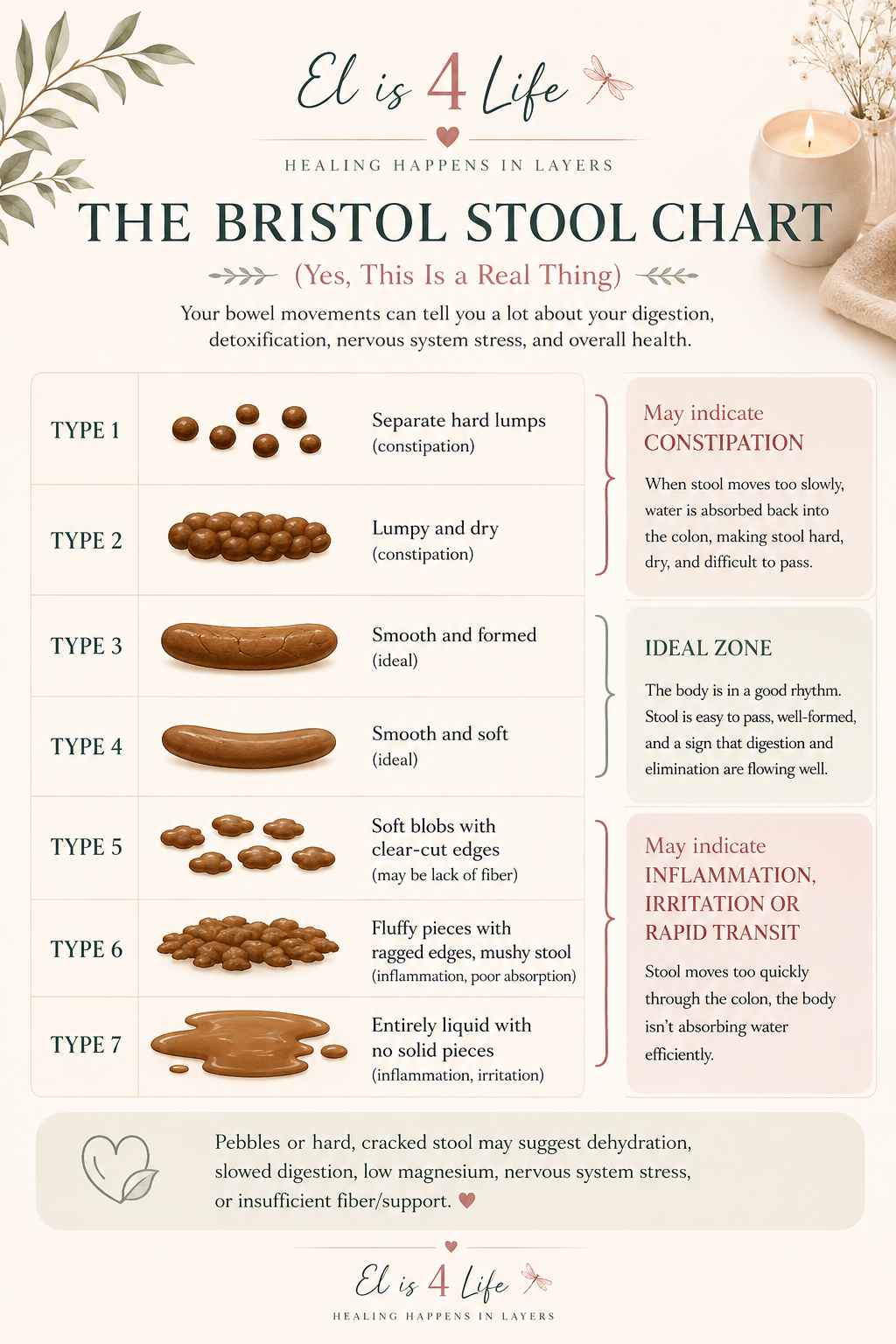
The Bristol Stool Chart (Yes, This Is a Real Thing)
Healthy stool is often described as:
smooth
formed
easy to pass
sausage-shaped
Pebbles or hard cracked stool may suggest:
dehydration
slowed digestion
low magnesium
nervous system stress
insufficient fiber or support
Loose stool may point toward:
irritation
inflammation
food sensitivities
infections
poor absorption
stress-related gut activation
The “Wipe Test”
This may sound strange, but it can sometimes be surprisingly informative.
If you frequently notice:
excessive residue
greasiness
mucus
unusual odor
undigested food
or difficulty getting clean
…it may suggest that digestion, fat absorption, inflammation, food sensitivities, or gut balance could use additional support.
A simple general guideline many people use is:
1 wipe → things are often moving and digesting fairly well
2 or more wipes consistently → there may be irritation, inflammation, food sensitivities, poor digestion, or gut imbalance worth paying attention to
Of course, every body is different, and this is not meant to diagnose anything — just another small clue your body may be giving you.
Color Matters Too
While food can absolutely change stool color temporarily, persistent changes can sometimes deserve attention.
Examples:
Very pale stool → may suggest bile flow concerns
Black stool → can sometimes indicate bleeding or iron supplementation
Bright red blood → should always be medically evaluated
Green stool → may happen with rapid transit, greens, bile shifts, or supplements
If something seems unusual or persistent, please consult your healthcare provider.
Nervous System & Digestion Are Deeply Connected
Many people do not realize how connected the gut is to stress and nervous system function.
When the body feels chronically stressed or unsafe, digestion often slows down or becomes dysregulated.
You may notice:
bloating
constipation
diarrhea
reflux
nausea
cramping
feeling full quickly
Sometimes the body is not just asking for “more supplements.”
Sometimes it is asking for regulation, nourishment, hydration, minerals, rest, and support.
Gentle Ways to Support Elimination
Some foundational supports may include:
hydration
magnesium citrate
mineral support
movement/walking
nervous system regulation
adequate protein and fiber
castor oil packs
digestive support (enzymes and probiotics)
using a squatty potty or stool to improve positioning (one of my favorites)
If using castor oil packs, choose a high-quality hexane-free organic castor oil stored in a dark glass bottle. If constipation gets worse with packs, discontinue use. For a few people they can have the opposite effect. Move slowly with any modalities you implement and keep a record of changes.
Sometimes There’s More Going On
Sometimes improving bowel movements may be as simple as increasing hydration, supporting minerals, adjusting nutrition, improving movement, or calming the nervous system.
But sometimes ongoing constipation, bloating, loose stool, excessive wiping, gas, irregularity, or digestive discomfort may point toward deeper issues like candida/yeast overgrowth, SIBO (small intestinal bacterial overgrowth), parasites, gut imbalance, inflammation, or impaired digestion.
This is one reason I often encourage people not to ignore long-term digestive symptoms or simply normalize them.
If foundational changes like diet, hydration, exercise, nervous system support, and basic supplementation are not moving the needle — or the poop 😅 — functional lab testing may help us better understand what your body is asking for and where additional support may be needed.
Healing happens in layers, and sometimes deeper answers require deeper investigation.
Final Thoughts
Your body is always communicating.
Symptoms are not always random or meaningless. Sometimes they are invitations to slow down and pay attention to the areas that may need more support.
You do not need to become obsessed with your bowel movements — but learning to notice patterns can provide helpful insight into how supported your body may or may not feel.
Healing happens in layers.
— El is 4 Life
