
When Histamine Shows Up as Joint Pain (And No One Tells You That’s Possible)
What You’ll Learn in This Post
In this post, we’ll gently walk through:
- How histamine intolerance can show up in ways you might not expect (including joint pain)
- Why certain “healthy” foods may actually be triggering symptoms
- The connection between gut health, inflammation, and histamine overload
- What your body may be trying to communicate through these reactions
- A simple, supportive first step to begin calming things down
If you’ve been feeling confused by your symptoms… this will help bring some clarity.

It’s not unusual to know something feels off…even if you can’t explain it yet.
One of the first things I learned when I moved beyond only using conventional medicine and started working with a health coach…
was that I had a histamine intolerance. At the time, I had developed so many food sensitivities. And one of my most frustrating symptoms was chronic, migrating joint pain. What confused me the most was that when I searched “histamine intolerance,”
I never saw joint pain listed as a common symptom.
So I didn’t even consider the connection.
During one of my sessions, my coach asked me a simple question:
“What foods do you eat that seem to be followed by joint pain within a day or two?”
I started listing them out:
Bananas.
Oranges.
Tangerines.
Grapefruit.
Lemon.
Lime.
Chocolate.
Aged cheeses.

Your body’s needs are unique—and sometimes that means redefining what “healthy” looks like.
She looked at me and said,
“You know those are all high histamine foods, right?”
And I remember thinking…
I don’t even know what “high histamine” means.
But that moment opened the door to a completely new understanding of my body.
What’s Actually Happening
Histamine isn’t “bad.”
It’s something your body naturally produces and uses.
But when your system becomes overwhelmed—
you can start reacting to things that normally wouldn’t be a problem.
One of the biggest underlying reasons this can happen is gut imbalance.
When the gut lining becomes weakened (sometimes called “leaky gut”),
things that are supposed to stay inside your digestive tract can start slipping into your bloodstream.
Your immune system sees those as invaders. And it responds.
Over time, this can lead to:
- Increased inflammation
- More food sensitivities
- Digestive Issues
-Moodiness, fatigue, skin issues, hives, anxiety, muscle pain, nausseau, etc.
- And some symptoms that don’t always “make sense”… like joint pain
The Histamine Connection
There’s also an important enzyme your body relies on called DAO (diamine oxidase).
Its job is to break down excess histamine. But when the gut is inflamed or damaged,
your body may not produce enough of it. So histamine starts to build up.
And that’s when symptoms can show up in all kinds of ways.
What Helped Me
I started with something simple: a low histamine diet. This means I stopped eating the foods that were high in histamines or triggered histamine releases in my body. I gave up eating leftovers if they were more than 48 hours old—esp meat as it increases in histamine with every passing day.
Within about a week, I noticed a significant drop in my joint pain.
That alone told me… my body was trying to communicate something.
From there, I focused on supporting my gut:
- Reducing overgrowth (like candida and other bacterial imbalances)
- And then working on healing and strengthening the gut lining
Because the goal isn’t to avoid foods forever— it’s to help your body handle them again. And if it is truly a gut issue— it can be resolved in as little as 12-24 weeks with the right diet and protocols!
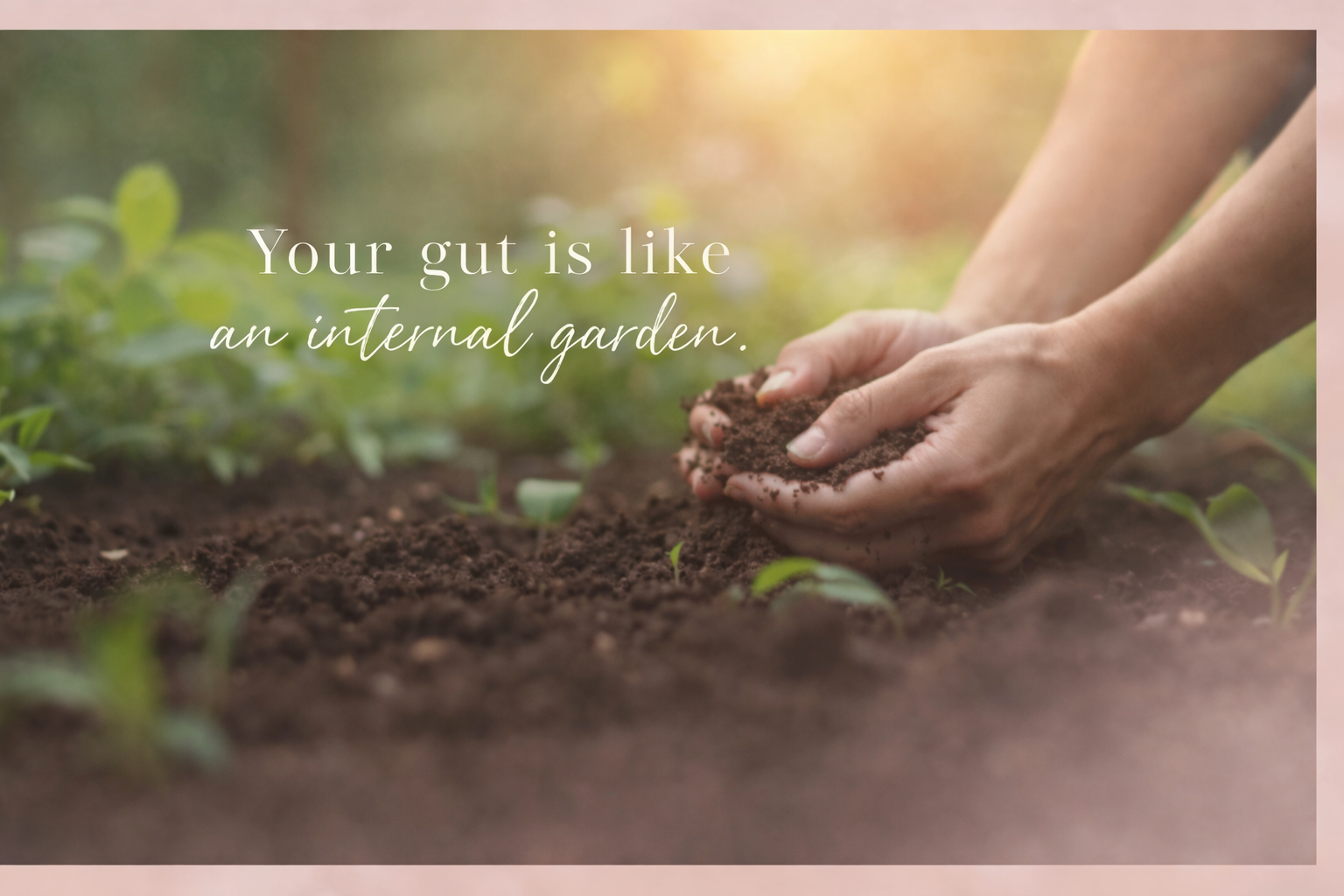
Just like a garden, your gut need the right conditions to thrive.
A Gentle Way to Think About It
I like to think of the gut like a garden.
If there are too many weeds, the nutrients and water get pulled away from what’s actually meant to grow. And over time, everything becomes weaker.
When you clear out what doesn’t belong and support the soil…things begin to restore.
Signs Your Gut Might Need Support
If you’ve experienced things like:
- Bloating or gas
- Constipation or diarrhea
- Acid reflux
- Skin issues (like rashes or rosacea)
- Fatigue
- Irritability or unexplained aches and pains to name a few
Your body may be asking for a little more support at the gut level.
It’s also important to say… resolving my histamine issues was not the end of my joint pain. But it did drastically improve it. At the time, I didn’t yet realize that I was also dealing with Lyme disease—a condition where migratory joint pain is actually a classic symptom. So while lowering histamine helped calm one layer of inflammation in my body… it wasn’t the full picture.
And this is something I see often:
Healing doesn’t usually happen all at once—especially when you’ve been dealing with chronic symptoms. It happens in layers.
One thing improves… which makes space to see the next thing more clearly.
And over time, those layers add up to real, meaningful change.
A Final Thought
If your symptoms haven’t made sense…
or you’ve felt like your body is reacting to everything…
You’re not crazy.
And your body isn’t broken. Sometimes it’s just overwhelmed.
And with the right kind of support,
it can begin to settle and heal—one layer at a time.
If this resonates with you, you’re always welcome to explore what support could look like for your body and your story. You can apply for the container by exploring the Complimentary Coaching Container Offer and Application and we’ll see if it’s a good fit.
No pressure. Just possibility.
